Engine 1
Mathematical Methods
Ozaki-style integer math turns high-precision matrix multiplication into exact integer products, plus other compute-level speedups.
An automated simulation workflow manager that reuses past results and speeds up the math, so every run costs less than the last.
Henry Cantor, Hansen Peng, and Nathan Jeong
The problem
Density functional theory alone uses more than 30% of the yearly compute cycles at NERSC, the Department of Energy's main supercomputing center. Most of it starts from zero.
A new structure or a tweaked parameter still means recomputing work that is mostly done already.
Tools like AiiDA reuse results only when the entire job is identical. Change one input, reuse nothing.
Outputs sit across scratch, local disks and archives with no index: hard to find, easy to lose.
“We must regularly remove the computed data from the /scratch directory. Once results are moved, it's inconvenient to revisit them.”
The solution
Engine 1
Ozaki-style integer math turns high-precision matrix multiplication into exact integer products, plus other compute-level speedups.
Engine 2
Matches segments of a new simulation to segments of past runs, then reuses or warm-starts them, even when the overall job differs.
Result
Each engine's speedup stacks on the other's, run after run.
One automated workflow manager. Every simulation result is consolidated into a single indexed database, so both engines always know what has been computed before.
Data network and results
Proof of concept
Run it again, or at a new temperatureExact
~1,600×The same script
Change the last step's functionalFast
~500×PBE0 or PBE final single point
A new functional, all of itFast
104×The whole script in PBE
Another conformerFast
67×The script, acid group turned over
Something brand newFast
27×The aspirin script, first run
Quantum ESPRESSOFast
17–20×Si8, atoms moved up to 0.08 Å (a full relaxation: 7×)
Metadata network
Feeds R&D in every segment and compares wall time used vs. requested to predict the right allocation for each job.
Customers contribute run metadata only:
The index
Indexed by calculation. Each result is catalogued by the calculation types and script sections inside it, with a similarity vector to every other result.
Light and confidential. Indexes and metadata live in our database. Full result files stay in your own long-term storage.
Built for teams. Project folders, a choice of which storage WarmStart draws from, access control and file permissions.
Storage that manages itself. Low-relevance runs are flagged for authorized archiving or deletion; we never delete. Pinned Artifacts are never purged.
Markets and expansion
We start where both engines pay off, then expand segment by segment.
Ozaki + WarmStart
Bound by dense linear algebra and matrix multiplication, so integer math and warm starts both pay off. The biggest multiple.
Electronic structure: electrons in molecules and solids (DFT, Hartree–Fock, coupled cluster).
WarmStart
Memory-bandwidth bound. Caching identical runs is already standard here, proof the market wants smarter reuse.
WarmStart + new math
Warm starts first; segment-specific multipliers added as we research them, the way Ozaki was for EQC.
Custom optimization
Monte Carlo and stochastic models. We custom-optimize in-house codes for banks and insurers: a pivot if needed.
We lead with an audit of each lab's own runs. The multiple it proves goes straight into allocation proposals and grant reports.
Competition
Open-source math
Emulate FP64 matrix math on fast integer units; now also in NVIDIA cuBLAS.
H98: Runs still start from zero. We stack the math with reuse, and it integrates with our software.
Open-source workflow
Track provenance; reuse a job only if its input hash exactly matches a past one.
H98: We match segments, so near-repeats get reused, not just exact copies.
Pay-per-use cloud
Cloud chemistry workflows, paid in credits per CPU or GPU minute.
H98: A flat subscription on customers' own codes, reducing the compute needed.
In-house tools
Proprietary queueing and bookkeeping built for a single organization.
H98: No upkeep burden, plus segment-level reuse and cross-industry learning.
Our platform: segment-level WarmStart × Ozaki-style math, running on an index of everything you've computed. Certified, and smarter with every simulation.
Team
Co-founder, CEO
Co-founder, CTO
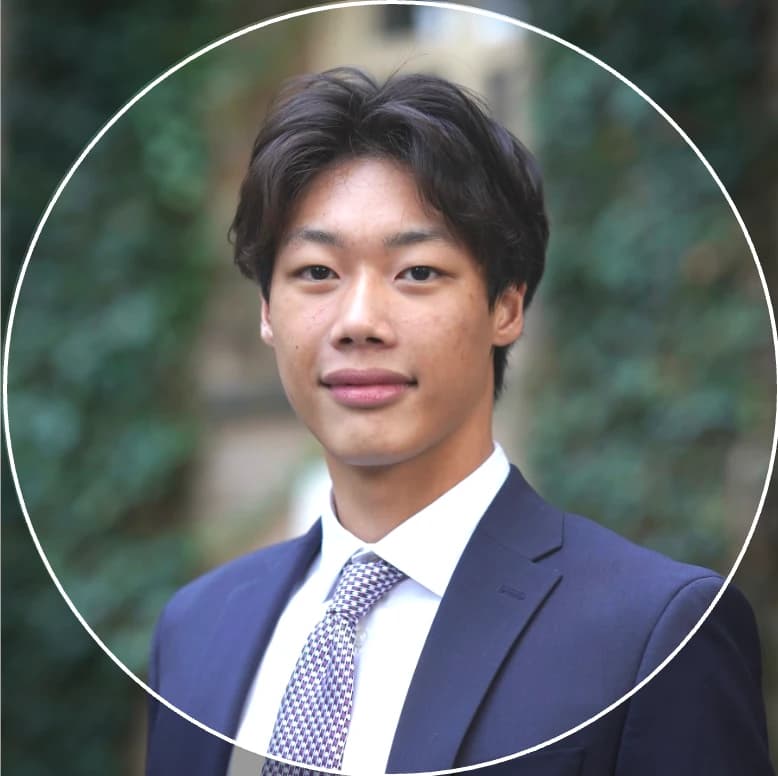
Co-founder, CFO
Get started
Pilots are open now in quantum chemistry. Tell us what you run and we'll set you up.